

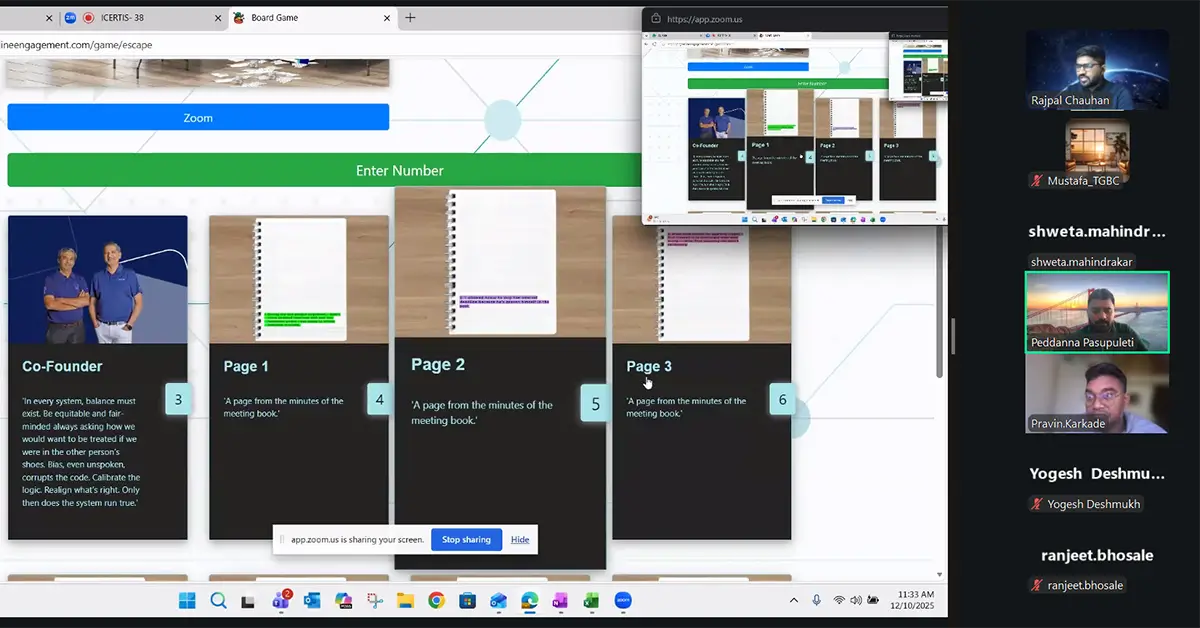
The Power of Virtual Team Building
In today’s remote-first world, virtual team building games aren’t “nice to have”, they’re a lifeline. When your team is scattered across cities and time zones, the accidental magic of an office, side chatter before a meeting, a laugh in the hallway, a quick brainstorm by the coffee machine, rarely happens. Without that casual connection, people can start to feel isolated or disengaged.
That’s where thoughtfully designed online games for remote teams come in. Done well, they’re not just fun; they’re a channel for trust, collaboration, and culture. A good virtual session gives people permission to show personality, take small risks, and learn each other’s rhythms again. It helps teams talk more openly, solve problems together, and re-create some of that in-office serendipity, even through a screen.
In this guide, you’ll find 50+ tried-and-tested ideas to bring team building in virtual environments alive for your organisation, plus tips on choosing the right format, running the tech smoothly, and turning game time into lasting team outcomes.
Why Virtual Team Building Matters
Before we dive into the games, here’s the “why” behind it:
1) It counters isolation.
Remote work is wonderful for focus and flexibility, but it can feel lonely. Short, regular team games re-introduce warmth and spontaneity.
2) It builds trust and collaboration.
When teammates solve a puzzle, race a clock, or co-create something playful, they build psychological safety, the bedrock of high-functioning teams.
3) It keeps culture visible.
Values fade when they aren’t lived together. Virtual team activities are a simple way to show “how we do things here” even when “here” is a Zoom tile.
4) It improves communication and innovation.
Games unlock curiosity and permission to experiment. That creative mindset spills over into day-to-day work.
If you’re serious about remote team engagement, choosing and running the right virtual team building games is a strategic move, not just a Friday perk.
How to Choose the Right Virtual Game for Your Team
Team size
- 4 – 12: pick discussion-rich formats and deeper collaboration games.
- 20 – 60: run parallel breakouts with a shared finale.
- 100+: think “festival”, short rounds, rotating rooms, and a central leaderboard.
Duration
- 5 – 10 minutes: quick energisers or icebreakers before a heavy meeting.
- 20 – 40 minutes: collaborative challenges where teams produce something.
- 60 – 90 minutes: simulations, multi-round quests, or leadership practice.
Objective
Be explicit: Are you aiming for connection, creativity, decision-making, feedback practice, or cross-functional bonding? When people know the “why,” they play with purpose.
Platform fit
Zoom, Teams, Google Meet, or Webex all work, just match your format to features: breakout rooms, broadcast messages, co-host controls, whiteboards, and polls.
Accessibility & logistics
- Keep instructions short, visuals clear, and rules simple.
- Offer low-bandwidth alternatives (e.g., chat-based answers, static images).
- Time-zone fairness: alternate session windows, or allow asynchronous entries.
Debrief
Always land the plane. A 5 – 8 minute debrief turns “fun time” into “useful time.” Ask: What worked? What tripped us up? What will we do differently in our next real project?
50+ Virtual Team Building Games
Below are five categories. Each game includes a punchy description, quick setup, and “why it works.” I’ve mixed quick icebreakers with deeper team challenges so you can plan a single session or a whole quarter around them.
A) Icebreaker & Energiser Games (5–15 minutes)
- Two Truths and a Lie
Share three statements, guess the lie.
Why it works: fast, funny, and reveals personality without oversharing.

2. Virtual Bingo
Bingo cards with squares like “cat walked on keyboard” or “wearing slippers.”Tip: randomise cards to avoid duplicate winners.
Wingo (Strategic Bingo)
Wingo offers a thrilling blend of skill, excitement, and entertainment. Inspired by Bingo, it's a high-paced, skill-driven team challenge. Participants…
3. Quickfire Questions
Lightning rounds: What’s your go-to comfort food?, Which city would you teleport to?
Why it works: low lift, high engagement.

4. Photo Share
Drop a photo of your workspace view, mug, or pet.
Facilitation trick: spotlight a few shares each round.

5. Emoji Intro
Introduce yourself using three emojis, then explain.
Variation: do it in pairs to warm up quieter folks.

6. Map It
Pin your location on a shared map and share one local tip.
Outcome: humanises distant colleagues.

7. Stretch & Reset
One person leads a 60-second stretch.
Why it works: moves everyone together and resets attention.

8. Mystery Background
Custom virtual backgrounds prompt teammates to guess where/why.
Add-on: a bonus point for fastest guess.

9. Show & Tell
Bring a small object with a story.
Outcome: personal, memorable, inclusive.

10. Random Question Generator
Spin a wheel of prompts, answer in chat, then discuss one.
Tip: keep questions light and inclusive.

11. Virtual Handshake
3-minute breakout pairs: “what I’m working on this week + one non-work joy.”
Outcome: helps cross-team rapport.

12. Trivia Lightning
Three rounds, one minute each.
Tip: theme the trivia (music, cities, product history).

13. Describe Your Week in One Word
Fast, reflective, surprisingly bonding.

14. Wins & Challenges
Each person shares one win and one challenge.
Outcome: empathy + momentum in five minutes.

15. Caption This
Share a random photo or meme; best caption wins.
Why it works: safe humour, quick dopamine hit.

B) Creative Collaboration Games (15–40 minutes)
16. Online Escape Room
Puzzle chain with locks, codes, images, and a shared story (TBGC’s Escape formats adapt well online).
Why it works: distributed thinking, time-boxing, and coordinated roles.
Escape Room
What if we told you, rescuing your boss can be a team building activity?
17. Digital Treasure Hunt
Clues link to web pages, maps, or shared docs.
Tip: plan 8–10 short clues, 2 tricky ones.
Virtual Treasure Hunt
Virtual Treasure Hunt is an ideal digital engagement activity for employees and their families. Participants embark on a hunt to…
18. Build-A-Story
Each participant adds one sentence to a shared doc.
Variation: give a theme (“Our product saves a space mission”).

19. Virtual Pictionary
Use a whiteboard; guess in chat.
Tip: make teams rotate artists every round.

20.Lego Look-alike (household version)
Build a “statue” from nearby items, show on camera, teams guess.
Outcome: delightful chaos + creativity.

21. Film Trailer Sprint
In breakout rooms, script a 30-second “trailer” about your team’s superpower. Perform live.
Outcome: storytelling + collaboration.

22. Remote Art Gallery
Create simple digital art around a theme; then do a gallery walk via screen-share.
Debrief: how we interpret the same brief differently.

23. Collaborative Mind-Map
Map an idea (e.g., customer journey) on Jamboard/Miro.
Why it works: visual consensus building.

24. Innovation Lab
Pose an absurd brief (“hotel on Mars”), ideate for 8 minutes, then pitch.
Outcome: playful innovation muscles.

25. Shared Playlist
Build a Spotify/YouTube playlist: “songs that help me focus.”
Outcome: culture + taste-sharing.

26. Role-Swap Presentation
Present your teammate’s role in 90 seconds.
Outcome: empathy for each other’s workload.

27. Design Sprint Lite
Define→Ideate→Prototype→Share in 20 minutes.
Tip: limit “prototype” to a sketch.

28. Secret Maker
Make something quickly (collage, acrostic), others guess the inspiration.
Outcome: fun reveal moments.

29.Cook-Along Challenge
Simple recipe; show final plating.
Tip: offer a “no-cook” version for inclusivity.

30. Virtual EscapeQuest
Story + puzzles + live narration.
Why it works: immersive, scalable, memorable.
C) Competitive & Leadership Games (20–60 minutes)
31. Virtual Trivia Contest
Theme it (industry, pop culture).
Tip: use a running leaderboard and a bonus “final wager.”

32. Virtual Office Olympics
Micro-challenges: desk push-ups, paper-plane accuracy, speed typing.
Outcome: high energy without breaking a sweat.
Geo Hunt Office Olympics
It's a race to the highest tri-level podium in this day long adventurous tech enabled team building activity! With GeoHunt,…
33. Remote CSR Missions
Teams pick a cause, plan a mini action (awareness post, simple kit plan), share outcomes next week.
Outcome: purpose + accountability.
34. Leadership Swap
Rotate leaders per round; leaders only get the full brief.
Debrief: how styles affected outcomes.

35. Shark Tank
Pitch mini-ideas to a panel; peers invest points.
Outcome: structure + persuasion practice.

36. Digital Escape Race
Same puzzle set, race the clock.
Outcome: speed + division of labour.

37. Hackathon Lite
One hour to reimagine a small workflow; pitch a 90-second solution.
Outcome: practical innovation.

38. Debate Club
Pro/Con on a playful prompt (“Cats vs. Dogs for PM”).
Outcome: argument structure + listening.
39. Crowd-Funding Game
Teams crowdfund “credits” from others by pitching.
Outcome: influence + storytelling.

40. Strategy Simulation
Use a simple online board to make tradeoffs; compare outcomes.
Outcome: systems thinking.
41. Mavericks (Virtual Edition)
TBGC’s leadership mystery with branching clues, VR/AR snippets, and role-based intel.
Outcome: critical thinking + calm under pressure.
The Mavericks
Solve a murder mystery with VR, AR and Ai. The Ultimate team challenge.
42. Virtual Wolf of Wall Street
Fast trading, shifting news cycles, team negotiation.
Outcome: communic Wolf of Wallstreetation under time pressure.
Wolf of Wallstreet
Experience the thrill of the stock market in this high-energy simulation that captures the chaos and excitement of trading. Teams…
D) Learning & Skill-Building Games (25–60 minutes)
43. Decision-Making Simulation
Timed choices with imperfect data; consequences reveal in rounds.
Debrief prompts: What assumptions helped/hurt? What data did we ignore?

44. Leadership Rotation
Each round a new leader guides the room.
Outcome: shared empathy for leading/following.

45. Communication & Delegation
Only one person sees the full instructions; others execute.
Outcome: clarity, brevity, and trust.

46. Virtual Safety Zone
Crisis scenario: distribute roles (Comms, Ops, Risk), coordinate a clean response.
Outcome: coordination + prioritisation.

47. Skill-Swap
Team teaches team: note-taking hacks, Notion tips, shortcut keys.
Outcome: peer learning + confidence.

48. Remote Feedback Circle
Structured “Start/Stop/Continue” micro-rounds with opt-in visibility.
Outcome: feedback literacy.

49. Project Kick-Off Game
Use a card set to define goals, roles, and “failure flags” for an upcoming project.
Outcome: alignment + prevention.

50. Innovation Roundtable
Pick a team friction (e.g., meetings run long), ideate fixes, commit to one experiment for 2 weeks.
Outcome: continuous improvement culture.

51. Inside Out – Team (Virtual)
TBGC’s Mind/Body/Team challenge adapted for screens: small tasks, quick wins, surprisingly strong bonding.
Outcome: energy + collaboration + reflection.
Inside Out
A fun team challenge. Solve clues, flex your mind & body. Earn points & bragging rights!
E) Seasonal & Themed Virtual Events (30–75 minutes)
52.Virtual Diwali Challenge
Traditions quiz, décor show-and-tell, festival-themed puzzles, and a gratitude segment.
53. Virtual Christmas Party Quest
Secret Santa draw, mini-games, and a “wrap the present” speed relay with camera props.
54. Summer Games Day
Tongue twisters, emoji charades, and scavenger speed rounds.

55. Halloween Escape
Spooky puzzle path; bonus for best costume on camera.

56. New Year Resolution Hack
Create a “team resolution board” for the quarter: three behaviours, one ritual.

57. Company Anniversary Quest
Timeline trivia, “founders’ story” puzzle, and a shared toast.

58. Squad Game (Remote Edition)
Squads, points, surprise power-ups, and theme music. Big energy, simple mechanics.

59. Fun Friday Festival
Pick a theme monthly (Olympics, Retro, Around the World) and rotate 3–5 mini-games.

60. Cultural Round-Up
Colleagues share 5-minute cultural windows: food, music, festivals; add a short quiz.

Virtual Games for Specific Occasions
- Fun Friday
Run a 10-minute energiser, then a 25-minute collab sprint, end with a two-question debrief. Keep it snackable. - Milestone Celebration
Use a themed treasure hunt of team “wins,” or a trailer sprint showcasing the project journey. - Cultural Events
Pair a short cultural show-and-tell with a themed quiz. Invite stories, not just answers. - Quarterly Offsites (Virtual)
Blend 2–3 game blocks, a break, and a clean finale. Keep transitions tight and music handy. - Onboarding
Mix “Now You Know Me”-style mixers with a light escape quest about company history.
Sample 60-Minute Agenda (Plug-and-Play)
- 00:00–00:05 Icebreaker (Emoji Intro + Stretch)
- 00:05–00:25 Collaboration Game (Digital Treasure Hunt)
- 00:25–00:40 Competitive Round (Trivia Lightning with wager)
- 00:40–00:52 Learning Block (Communication & Delegation)
- 00:52–00:60 Debrief & Wins (two prompts + shout-outs)
Debrief prompts (pick two):
- What helped us move fast without chaos?
- Where did we over-communicate or under-communicate?
- Which moment built trust?
- What one behaviour should we bring to next week’s sprint?
Tech & Facilitation Tips (That Save You Headaches)
- Co-hosts: Always have a co-host to manage breakouts, chat, and music.
- Broadcast messages: Pre-write 3–4 broadcast prompts to keep rounds on pace.
- Timer on screen: A visible countdown adds urgency and fairness.
- Low-bandwidth fallbacks: Allow chat-only entries and static puzzle images.
- Clear rules & scoring: Keep point systems simple; show the leaderboard twice (mid and end).
- Music snippets: 10–15 seconds between rounds lifts energy.
- Props (optional): Pen, paper, one household object. Always optional, never mandatory.
- Camera kindness: Invite cameras on, never force. Recognise voice-only participants too.
Troubleshooting: Common Snags & Smooth Fixes
- No one’s responding. Start with a 60-second paired chat. Smaller psychological steps warm people up.
- Breakouts ran over. Use a hard one-click timer that auto-closes rooms with a 10-second warning.
- Different time zones.Offer two time slots, or allow asynchronous entries for a bonus round.
- Participation feels uneven. Rotate spokesperson roles; use randomiser tools to call on teams, not individuals.
- It felt chaotic. Reduce the number of rules, add one visible scoreboard, recap expectations before each round.
Outcomes: How the Games Translate to Real Work
1.Trust
Small shared risks (timers, puzzles, reveals) + supportive behaviours (guiding a teammate, asking for help) = psychological safety you can fee
2. Communication
Players practise brevity, clarity, and turn-taking under time pressure. This carries straight into daily stand-ups and handovers.

3. Collaboration
Teams learn to split work intelligently, compare options quickly, and re-group fast when something fails.
4. Engagement
Short wins, visible progress, and laughter lower friction for tougher conversations later in the day.
5. Innovation
Constraints + playfulness nudge people to try new approaches. It normalises experimentation.

Advanced: Turning Games Into Ongoing Team Rituals
- Sprint Kick-offs: Start with a 5-minute energiser; end sprints with a 10-minute “learning game + reflection.”
- Monthly Mixers: Rotate categories, creative one month, competitive the next.
- Leadership Labs: Run a quarterly simulation (Mavericks/Wolf of Wall Street/Decision Game) with a structured debrief and documented takeaways.
- Recognition Rituals: Tie wins in the game to real work kudos: “Best Communicator,” “Best Assist,” “Calmest Under Pressure.”
TBGC’s Best Virtual Team-Building Concepts: The Ultimate Guide to Engaging Remote Teams
Remote work isn’t new anymore, but the struggle to keep teams connected, energised, and genuinely engaged is still real. When people are spread across cities, time zones, and screens, something as simple as collaboration can suddenly feel heavier. That’s exactly where the right virtual team-building concepts change the entire rhythm of a team.
At TBGC, we’ve spent years designing virtual experiences that go far beyond “fun Zoom games.” Our formats are built like miniature team simulations, where people think, talk, collaborate, compete, and genuinely feel connected by the end of the session. These aren’t passive events. They’re interactive, story-driven, and packed with twists only TBGC is known for.
Here’s a deep dive into some of TBGC’s best virtual team-building concepts, and why companies across India, the UAE, the US, and Europe keep coming back to them.
61. Virtual Escape Room: Mission Mode Activated
Escape rooms became a global craze for a reason, people love solving, decoding, and working against the clock. TBGC took that magic and reimagined it for remote teams.
Our virtual escape rooms blend storytelling, multi-layered puzzles, hidden clues, team communication, and role-based decision-making. Every chapter unlocks only when teams think together. It’s impossible to “wing it” solo.
Some team behaviours that naturally emerge:
clear delegation
structured communication
collective problem-solving
real-time decision making
Clients love how this format subtly reveals team dynamics without ever feeling preachy. It’s thrilling, immersive, and incredibly memorable.
Best for: distributed teams, cross-functional collaboration, quarterly offsites, international teams who want something more than a standard virtual meetup.
62. Geo Quest – A Global Hunt Without Leaving Your Desk
Geo Quest is TBGC’s signature global exploration challenge – powered by Google 360, clever riddles, and fast-paced teamwork.
Geo Quest
Virtual globe race! Teams guess locations on Google Earth. Explore & compete for the win!
Teams travel virtually across cities and landmarks, solving location-based puzzles and cracking clues that unlock the next destination. Because it feels like a race around the world, the energy stays high from start to finish.
Why teams love it:
- It’s fast, fun, and visually immersive
- Everyone gets to contribute, regardless of role or personality
- It feels like travelling together as a team
Companies often use this for Fun Fridays and global team days because it brings people together without any heavy learning agenda, yet still builds collaboration beautifully.
63. Wingo – Where Bingo Meets a Slot Machine
Wingo is TBGC’s most addictive virtual crowd favourite and for good reason.
Wingo
Team Bingo with a twist! Wingo is a fast-paced challenge of skill and strategy.
Mix the nostalgia of Bingo with the unpredictability of a Vegas slot machine, throw in some suspense, sprinkle team competition… and suddenly you have a virtual format where nobody mutes themselves or turns their camera off.
Wingo works beautifully for large groups that want something lively, simple, and full of cheers and groans.
Why it works:
- Equal participation
- Fast gameplay
- Easy to understand
- Perfect for celebrations and large gatherings
It’s the “no-brainer” option when you want people to have fun instantly.
64. Saving the Boss – A Rescue Mission That Demands Teamwork
Saving the Boss game puts your team inside a time-bound mission where the CEO has been kidnapped and only the participants can decode the truth. Every clue opens up new twists, new suspects, and new challenges.
Save the boss
Enter the realm of virtual escape rooms! Teams dive headfirst into a thrilling race against the clock, where they must…
It’s dramatic, story-driven, and keeps teams on their toes.
The best part?
Teams cannot solve it unless they communicate and pool their findings. People who rarely speak up during regular meetings suddenly become the MVPs of the mission.
Best for: problem-solving, cross-functional bonding, leadership groups, and teams who enjoy strategy games.
65. Data Privacy Escape Room (Mission: Data Shield)
Created especially for companies who want engagement + awareness training in one format.
Teams must protect a national database from a cyber-attack, but the answers lie in how well they understand privacy rules, data-sharing principles, and digital hygiene.
We built this as a learning-first escape room without making it feel like “training.” Companies love it because employees leave with:
- higher awareness
- better digital discipline
- stronger team alignment
And the best part? It’s actually fun.
66. DIB – The Diversity, Inclusion & Belonging Virtual Treasure Hunt
This is one of TBGC’s most meaningful virtual experiences.
DIB takes teams through scenarios, stories, and puzzles that challenge unconscious bias, inclusion behaviors, and collaboration styles, all wrapped inside a treasure hunt.
Selected game not found or not published.
It’s powerful without being heavy. Deep without being uncomfortable.
We’ve seen teams walk away with real reflections and genuine shifts in perspective.
Best for: culture-building, HR initiatives, Women’s Day sessions, cross-cultural teams.
67. Virtual Squad Game – Play. Compete. Survive. Win.
Inspired by the global phenomenon, this version is safe, exciting, and packed with strategy.
Teams face multiple mini-challenges – mental, numerical, logical and must strategise together to survive each round. It’s competitive, energetic, and surprisingly collaborative.
It works especially well for:
- Annual celebrations
- Remote offsites
- Teams who love high-intensity games
It’s also fantastic for breaking silos because every round requires alignment.
68. Virtual Record Breaker
Virtual Record Breaker is the online version of our legendary high-energy physical game—but adapted for a remote setup.
The Record Breakers
The Record Breakers is a fast-paced, high-energy team challenge where participants compete to complete a variety of quirky, exciting, and…
Teams attempt world-record-style challenges that test reflexes, logic, speed, and creative thinking. Because each challenge is short, snappy, and high-stakes, the room (or Zoom!) is always buzzing.
Why it works:
- Great for energising remote employees
- Perfect kickoff for long virtual meetings or conferences
- Builds teamwork in small bursts
This is the equivalent of giving your team a shot of adrenaline.
What Makes TBGC’s Virtual Experiences Truly Stand Out?
1. Human-first design
Everything we build considers how people think, react, and collaborate online. Our formats aren’t one-sided or passive, they demand connection.
2. Tech that enhances, not complicates
Simple interfaces, smooth gameplay, no downloads, no glitches.
People get straight to playing.
3. Story-first experiences
When employees enter a game that feels like a movie or adventure, engagement becomes natural.
4. Designed for behaviour change
Whether the goal is collaboration, problem-solving, inclusion, or just having a great time — our formats push teams to show up, participate, and improve together.
5. Loved by global teams
We’ve run these games for Google, Amazon, Deloitte, P&G, Mahindra, Disney, Dream11, and 500+ organisations across India, Dubai, Singapore, and the US.
Remote teams don’t need to feel like a cluster of tiles that occasionally un-mute. With the right virtual team building games, you can build genuine connection, practice real skills, and keep your culture visible, even across continents. Pick one quick energiser and one deeper challenge, debrief with two honest questions, and repeat monthly. It’s simple, sustainable, and done right, transformational.
Here’s to teams that connect, create, and grow together, wherever they’re logging in from.
Part 2: Bonus Game Bank, Templates & Ready-Made Scripts
Bonus Micro-Games (60–120 seconds each)
- Chat Scattergories: Pick a letter; everyone types a food/city/animal. First unique answer gets a point.
- Emoji Charades: One person emotes with emojis only; team guesses the film or phrase.
- One-Line Pitch: “Sell me this mug in one sentence.” Speed + persuasion.
- Wrong Answers Only: Ask a straight question; teams answer wrong, fast. Hilarious and safe.
- Zoomed-In: Share a zoomed image; teams guess the object.
10 Fresh Breakout Prompts (Copy/Paste)
- Tell a story about your city in 60 seconds.
- What’s one micro-habit that makes your day easier?
- If our team was a band, who plays what?
- Swap one keyboard shortcut you can’t live without.
- Pitch a two-minute fix for meetings that run long.
- Describe our product to an eight-year-old.
- What’s a recent tiny win you’re proud of?”
- What frustrates our customers most—and one quick fix.
- Name a teammate superpower you’ve noticed.
- If we had a team mascot, what would it be and why
Three Ready-to-Run 45-Minute Sessions
Session A: Connect + Create
- Icebreaker (5): Photo Share
- Creative (20): Film Trailer Sprint
- Competitive (12): Trivia Lightning
- Debrief (8): What helped us move fast without mess?
Session B: Decide + Deliver
- Icebreaker (5): Quickfire Questions
- Learning (18): Communication & Delegation
- Competitive (12): Digital Escape Race
- Debrief (10): What will we try in the next sprint?
Session C: Celebrate + Reflect
- Icebreaker (6): Wins & Challenges
- Festive (20): Seasonal Quest (Diwali/Christmas/Halloween)
- Recognition (10): Peer awards (Best Assist, Calmest, MVP)
- Debrief (9): What behaviour deserves a monthly ritual?
Debrief Question Bank (Pick 2–3)
- Where did we over-explain? Where did we assume too much?
- Who rescued the round without trying to be a hero?
- What was our best decision under uncertainty?
- Which rule clarified our chaos?
- What will we bring to Monday’s stand-up?
Facilitator Script Starters
- Before we start, here’s our goal in one line…
- You’ll have 7 minutes. I’ll broadcast prompts at 4 and 1.
- If your Wi-Fi wobbles, drop answers in chat—we’ll count them.
- Camera on is welcome, not mandatory—play your way.
- Two things we’ll look for in the debrief: clarity and teamwork.
Light-Touch Scoring Models
- Classic: 5 points for a win, 2 for second, 1 for participation.
- Momentum: +1 for every on-time submission; miss one, reset your streak.
- Fair Play: +2 bonus if another team calls out your good assist.
- Wild Card: Random 3-point “kindness” card for helpfulness.
How a Hybrid Team Strengthened Collaboration Through TBGC’s Custom Virtual Escape Room – “CEO’s Abduction”
Client Background
A mid-sized technology company with employees split across three hubs – Mumbai, Pune, and Bangalore, approached us with a simple brief:
Our team works together every day, but they don’t feel connected. We need something engaging that brings everyone onto the same page, without feeling like more Zoom.
Their biggest challenges were familiar:
- hybrid employees felt disconnected from headquarters
- new joiners struggled to gel with older team members
- conversations were functional, never truly collaborative
- misunderstandings across teams were slowing down execution
The HR team wanted an experience that was fun yet meaningful, structured yet exciting, and above all, something that required actual teamwork – not passive participation.
TBGC’s Solution: A Custom Virtual Escape Room – CEO’s Abduction Edition
We designed a fully customised Escape Room storyline based on their industry, internal terminology, and team roles.
The Plot
Their CEO had been abducted by a rogue insider.
Every department was a suspect.
The only way to save him?
Teams needed to decode clues across emails, financial documents, maps, CCTV snippets, security footage, code fragments, incident logs – each crafted to mirror their real-world work.
This was not a simple “solve the puzzle” format.
It was an interconnected mission where:
- clues had dependencies
- information was scattered across teammates
- every role mattered
- there was no way to progress without talking to each other
- teams had to think logically, plan together, and act as a single unit
Even the ending was customized with the CEO appearing live to congratulate the winning team, adding a surprise emotional moment that made the entire experience unforgettable.
How the Activity Transformed the Hybrid Team
1. Communication Became Natural, Not Forced
Hybrid teams often struggle with fragmented communication.
This activity fixed that instantly.
Because clues were distributed across different people, players had to:
- speak clearly
- share findings quickly
- coordinate actions
- listen actively
- compare interpretations
Team members who rarely spoke up in daily calls suddenly became key contributors because they held crucial information.
The shift was immediate and powerful.
2. Silos Broke Without Any PowerPoint Slides
The client had cross-team friction, especially between product, engineering, and operations.
In the escape room, every clue required perspectives from multiple roles.
Engineers needed support from operations.
Operations needed marketing insights.
Marketing needed product logic.
Escape Room
What if we told you, rescuing your boss can be a team building activity?
This interdependence forced teams to collaborate in ways that directly mirrored their actual work but in a fun, pressure-free environment.
By the end, one participant said:
“I learned more about how my teammates think in one hour than in six months of meetings.”
3. Leadership Qualities Emerged Organically
One thing TBGC escape rooms naturally do is reveal leadership – not through titles, but through behaviour.
During the mission, we saw:
- someone quietly stepping in to organise clues
- someone else summarising findings for the team
- someone staying calm when the clock was ticking
- a new joiner spotting a mistake others had overlooked
These are the exact behaviours hybrid workplaces struggle to surface and this activity created a safe, playful space for them to shine.
4. Trust & Psychological Safety Deepened
Because everyone was equally “lost” in the beginning, hierarchy dissolved.
Senior members laughed when they messed up.
Junior members led key deductions.
People asked questions without hesitation.
There was no judgment, only teamwork.
This built a shared memory that became a turning point for the team’s culture.
5. A Shared Win → A Shared Identity
When the final lock opened and the CEO’s video message appeared, the team erupted. Screenshots, cheers, and happy chaos filled the call.
For a hybrid team that often felt disconnected, this moment acted like emotional glue.
It gave them a story to tell.
A win to celebrate.
A memory that belonged to everyone equally.
Key Learnings Gained From the Experience
1. Better Communication Under Pressure
The activity forced them to structure conversations, speak clearly, and listen actively, all skills essential for hybrid workflows.
2. Faster Decision-Making
With limited time and too many clues, they had to decide quickly, delegate smartly, and avoid overthinking.
3. Understanding How Others Work
Team members saw how different roles approach problems – logical vs. intuitive, detail-first vs. big-picture, improving empathy and coordination.
4. Collaborative Problem-Solving
Since no clue made sense independently, they had to combine information, mirroring real cross-functional tasks.
5. Building Trust Through Shared Fun
Laughing together, failing together, figuring out together, it all strengthened trust in ways no meeting or training session could.
Outcome
Within two weeks, the HR team messaged us saying:
People are talking more, collaborating more, and even volunteering to work cross-team. Your escape room did something our internal initiatives couldn’t.
For a hybrid team that had been slipping into silent collaboration, this experience became a cultural reboot.
FAQs
What are the best virtual team building games for remote teams?
The best virtual team building games are those that go beyond surface-level fun and actually create interaction, decision-making, and shared problem-solving. At TBGC, our most effective virtual formats include Virtual Escape Rooms, Mavericks (virtual murder mystery), Now You Know Me (NYKM), Inside Out, and Geo Quest–style virtual hunts. These games work because they require teams to talk, listen, delegate, and think together, rather than just react individually.
How do virtual team building games improve remote employee engagement?
Remote work often reduces informal conversations and spontaneous collaboration. Virtual team building games recreate those moments intentionally. TBGC games are designed with forced collaboration mechanics, meaning participants cannot progress without communicating. This increases engagement by making every voice matter. Teams feel more involved, more seen, and more connected, even when working from different locations.
Which virtual team building games work best for large remote teams?
For large teams, scalability and structure matter. TBGC handles this through breakout-based formats with centralized scoring and storytelling. Games like Virtual Escape Rooms, Mavericks, The Greatest Showdown (virtual edition), and Record Breaker work exceptionally well for 50–500+ participants. Teams are split into smaller units, while still feeling part of one shared experience.
What are quick virtual team building games for online meetings?
For short meetings or energy resets, lighter formats work best. TBGC often recommends:
Now You Know Me (short rounds)
Inside Out micro-challenges
Quick logic or communication sprints from Record Breaker
These can run in 10–20 minutes and are perfect for kick-offs, mid-meeting energizers, or Fun Fridays.
What virtual team building games work well on Zoom or Microsoft Teams?
Most TBGC virtual games are platform-agnostic and work seamlessly on Zoom, Microsoft Teams, Google Meet, or hybrid setups. Our Virtual Escape Rooms, Mavericks, Geo Quest, and Inside Out use a combination of video calls, interactive dashboards, and real-time collaboration tools that integrate smoothly with these platforms.
Are virtual team building games effective for fully remote teams?
Yes, when designed intentionally. TBGC has worked extensively with fully remote teams across time zones. Our games focus on collaboration over competition, psychological safety, and shared goals. Fully remote teams often benefit even more because these games replace the bonding that would otherwise happen in an office.
What are fun virtual icebreaker games for remote employees?
Icebreakers should feel natural, not awkward. TBGC’s Now You Know Me is a standout because it balances fun with depth. Instead of generic questions, it helps teammates learn how others think, decide, and communicate. Short versions of Inside Out also work well as icebreakers without putting anyone on the spot.
Which virtual team building games help improve communication?
Games that require information exchange and clarity are best for communication. TBGC’s Virtual Escape Rooms, Mavericks, and Force (virtual logic version) demand constant alignment. Teams quickly realize the cost of poor communication and improve it in real time.
What online team building games encourage collaboration in remote teams?
Collaboration improves when success is interdependent. TBGC designs games where:
No single player can solve everything
Roles are distributed
Information is fragmented across team members
Games like Mavericks, Gold Rush (virtual), and The Greatest Showdown are built entirely around collaborative problem-solving.
How do you run virtual team building games across different time zones?
TBGC handles this in three ways:
Multiple time-slot runs of the same experience
Asynchronous challenges combined with live touchpoints
Shorter modular sessions instead of long workshops
This ensures inclusivity without forcing teams into uncomfortable hours.
What are low-effort virtual team building activities for busy teams?
For teams with limited bandwidth, TBGC suggests:
15-minute Inside Out challenges
Lightweight NYKM rounds
Micro problem-solving sprints
These require minimal prep, low energy output, and still deliver meaningful connection.
Can virtual team building games work with cameras off?
Yes, if designed well. TBGC games rely more on interaction, decision-making, and shared tasks than constant video presence. While cameras help, our experiences still work with audio-only or chat-based collaboration, especially for global teams with camera fatigue.
How do virtual team games help build trust in remote teams?
Trust builds when teams depend on each other. TBGC games create moments where:
One person’s mistake affects the whole team
Another person’s insight saves the group
These shared highs and lows build trust faster than traditional meetings ever could.
Which virtual team building games are best for Fun Friday sessions?
Now You Know Me
Inside Out
Wingo (virtual bingo with a twist)
They’re fun, quick, and still meaningful—perfect to end the week on a high.
What are creative virtual team building games for remote teams?
Creativity thrives in narrative-driven formats. TBGC’s Mavericks (VR-assisted murder mystery) and custom Virtual Escape Rooms stand out because they blend storytelling, technology, and teamwork, making them feel completely different from standard online games.
What virtual team building games improve problem-solving skills?
Problem-solving improves when teams face ambiguity. TBGC’s Escape Rooms, Force, Gold Rush, and Record Breaker place teams in high-pressure scenarios where logic, collaboration, and adaptability are essential. The post-game debrief then connects these behaviors directly back to workplace challenges.
Engaging Memory Games to Sharpen Your Mind
A good memory is useful in almost every part of
15 Management Games to Play at Work
Management is not just about titles or authority. It’s about

15 Team Building Ideas for Introverts
Team building often gets mistaken for loud icebreakers, high-energy games,
