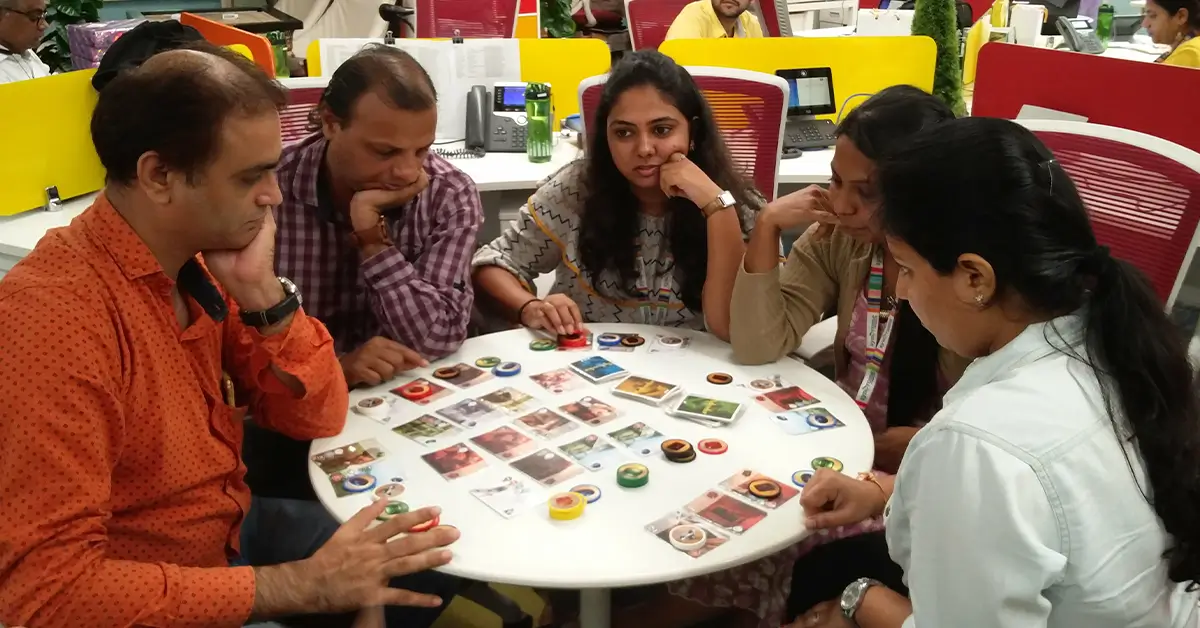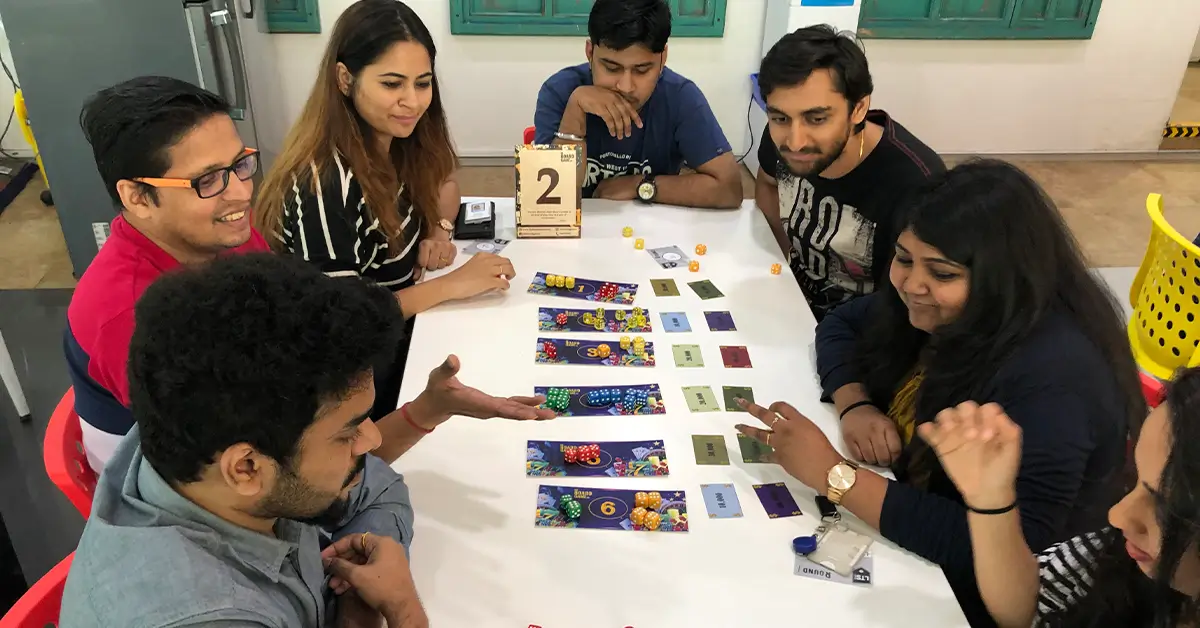
Management is not just about titles or authority. It’s about planning under pressure, making decisions with limited information, managing people and resources, and adapting when things don’t go as expected. That’s where management games become powerful learning tools.
Management games help employees and students experience leadership in action rather than just talk about it. They bring real-world challenges into a safe, simulated environment where participants can test ideas, make mistakes, reflect, and improve.
These activities work especially well for management students, MBA and BBA classrooms, corporate teams, new managers, leadership development programs, and training workshops. When designed well, they improve time management, decision-making, collaboration, and strategic thinking, skills every manager needs.
15 Management Games to Play at Work
1. The Marshmallow Challenge
Teams are given limited materials and must build the tallest structure that can support a marshmallow on top. This game highlights planning, experimentation, leadership emergence, and how teams handle failure and iteration.
2. Tower Building Competition
Teams build a freestanding tower using basic materials like paper, straws, or blocks. The activity focuses on planning, role clarity, communication, and balancing speed with stability.
3. Project Planning Puzzle Game
Participants receive a complex task broken into multiple dependencies. Teams must plan timelines, assign responsibilities, and sequence tasks correctly, mirroring real project management challenges.
4. Time Management Race Game
Teams complete multiple small tasks under strict time constraints. The game reveals how prioritization, delegation, and focus impact performance under pressure.
5. Leadership Blindfold Challenge
One team member is blindfolded while others guide them through a task using verbal instructions only. This builds trust, clarity of communication, and leadership accountability.
6. Resource Allocation Simulation
Teams are given limited resources and multiple objectives. They must decide where to invest time, money, or effort—teaching trade-offs, budgeting, and strategic thinking.
7. The Delegation Game
Managers assign tasks to team members with different strengths and constraints. The outcome depends on how well leaders match tasks to people and avoid micromanagement.
8. Decision-Making Maze
Teams navigate a series of choices, each leading to different outcomes. The activity emphasizes risk assessment, decision ownership, and learning from consequences.
9. Crisis Management Scenario Game
Teams respond to a simulated crisis such as a deadline failure, customer escalation, or operational breakdown. This builds composure, collaboration, and problem-solving under stress.
10. Business Simulation Board Game
Participants run a mock business, making decisions around pricing, operations, marketing, and people management. The game helps connect strategy with execution and outcomes.
11. Operations Management Relay
Teams complete a workflow where each person handles a different step. Bottlenecks, handovers, and errors become visible—mirroring real operational challenges.
12. Negotiation Role-Play Game
Participants take on different stakeholder roles and negotiate outcomes. This strengthens persuasion skills, empathy, listening, and win-win thinking.
13. Change Management Challenge
Teams are given a sudden rule or goal change mid-game. The activity reveals adaptability, resistance to change, and how leaders communicate transitions.
14. Budget Management Game
Teams allocate a fixed budget across competing priorities. The game reinforces financial awareness, cost-benefit thinking, and accountability.
15. Team Strategy Tournament
Teams compete across multiple rounds, each requiring different strategies. Success depends on learning from previous rounds and adjusting plans quickly.
Final Thoughts
Management games turn abstract concepts into lived experiences.
They help participants practice leadership, communication, planning, adaptability, and teamwork in a way that lectures or presentations never can. Whether used in corporate training programs, MBA classrooms, BBA courses, or leadership workshops, these activities make learning practical, memorable, and impactful.
When teams play, reflect, and debrief together, they don’t just learn management, they experience what good management feels like.
FAQ’s
What are management games, and why are they useful at work?
Management games are structured activities that simulate real workplace challenges. They help participants practice leadership, decision-making, and teamwork in a hands-on way.
Which management games are best for employee development?
Games that involve planning, delegation, decision-making, and collaboration are most effective for developing managerial skills.
How do management games improve leadership skills?
They allow participants to lead in real time, receive feedback, and reflect on their leadership style in a safe environment.
What time management games work well for office teams?
Time-bound challenges, prioritization games, and task races work especially well for teaching focus and efficiency.
Are there management simulation games suitable for training sessions?
Yes. Business simulations, crisis scenarios, and resource allocation games are ideal for structured training programs.
What project management games help teams practice planning and execution?
Project planning puzzles, workflow relays, and dependency-based challenges are excellent for project teams.
How can companies use management games to motivate employees?
Games make learning engaging, break routine, and help employees feel invested in their growth.
What are simple classroom management games for management students?
Tower-building, delegation games, and decision-making exercises work well in MBA and BBA classrooms.
How do management games support teamwork and collaboration?
They create shared challenges where success depends on communication, trust, and coordination.